Events that are easy to join
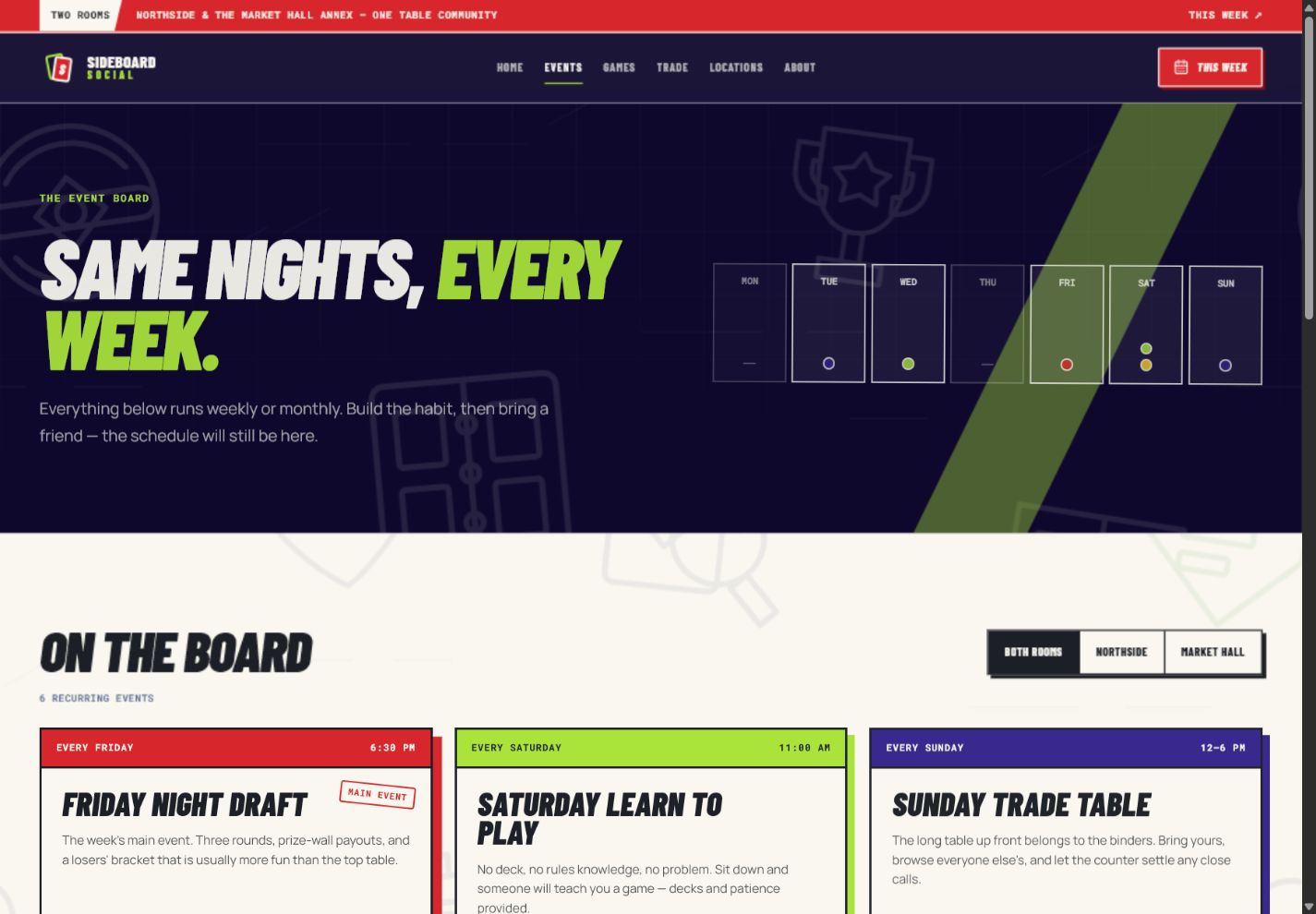
A weekly event board uses ticket-style details, filters, times, entry information, and room context so visitors can decide where they fit.

Self-initiated concept
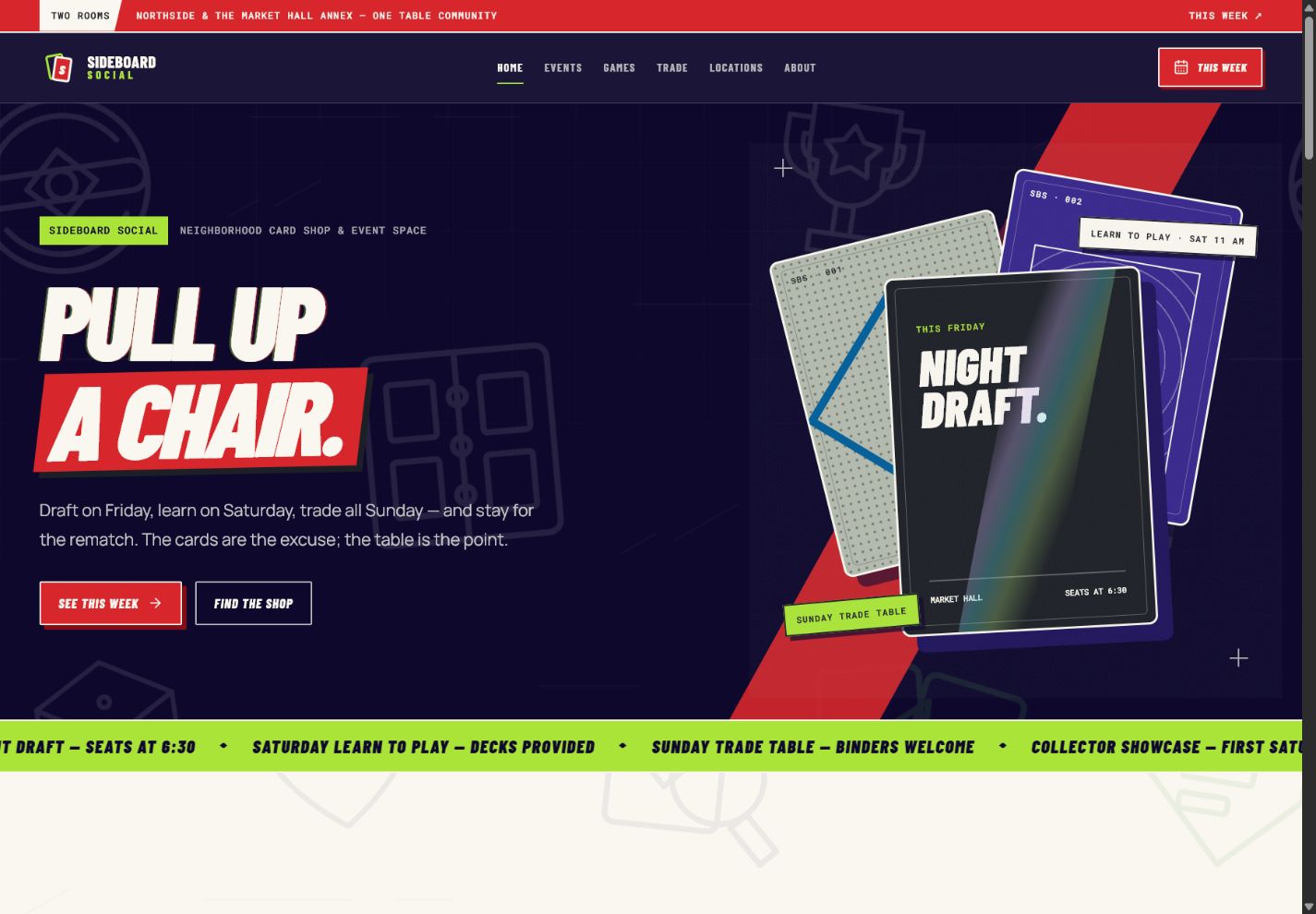
Sideboard Social is a concept for a neighborhood trading-card shop and event space. It turns a busy mix of games, events, trade-ins, and locations into clear paths for regulars and first-time visitors.
Concept disclosure: Sideboard Social is fictional and self-initiated. It was not commissioned by or created for a client, and it does not present client outcomes.
The design problem
A TCG shop serves people arriving for different reasons: a first learn-to-play session, a weekly draft, a trade-in, a favorite game, or a quick check of the nearest room. The site needs to make each next step easy without feeling like a generic online storefront.
The concept starts with the rituals of a real card shop—event tickets, binder pockets, counter notes, shelf spines, and a weekly rhythm—then uses those objects to organize content rather than decorate around it.
The site system
A weekly event board uses ticket-style details, filters, times, entry information, and room context so visitors can decide where they fit.
Binder pockets, deck spines, trade ledgers, and printed matter make the shop feel specific while helping organize the information.
Games, buy/sell/trade, locations, about, and contact each have their own purpose instead of repeating one generic page pattern.
Designed for the whole visit
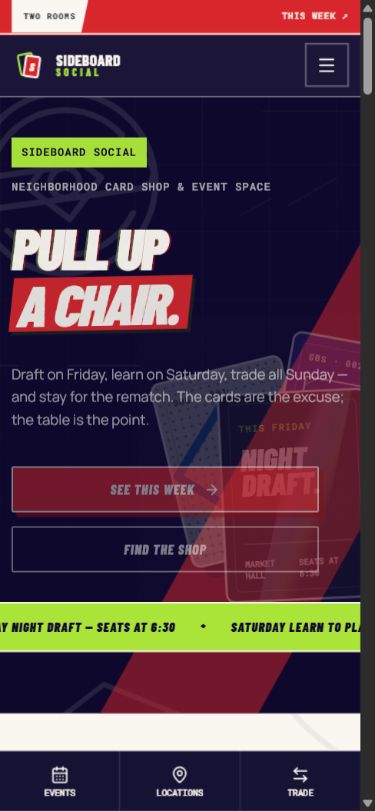
The seven routes cover home, events, games, buy/sell/trade, locations, about, and contact. Each route carries a distinct information task while sharing one visual grammar.
How it was checked
The concept was reviewed in a local browser build. Reduced-motion rules were checked in source and browser parsing; a rendered reduced-motion emulation was not available in that QA environment. No audience, search, inquiry, revenue, or conversion outcomes are presented here.
Back to the proof hubStart with a short intake. We will recommend a practical scope and explain the next step before any commitment.
No payment or commitment is required to send the intake.